


How to Unclog a Drain Safely
A slow or clogged drain does not always mean the same thing. One sink may be a local fixture issue. Several fixtures reacting together can point deeper. This guide helps you decide what is reasonable to check — and when to stop.
Quick answer
For one slow drain, check the visible stopper, basket, or trap area if it is safe and accessible. Stop testing if water rises, more fixtures react, sewage smell appears, or the same drain keeps clogging again.
What is this connected to?
Use these compact routes when the guide points toward a specific service page.
What to know first
Practical boundaries that keep the guide useful without turning it into risky DIY instructions.
One drain or several drains?
The pattern matters more than the label. One fixture is usually a local starting point. Several fixtures, lower drains, gurgling, or sewer smell can point toward a deeper drain or sewer route.
- One sink slow: start with local clog guidance
- Kitchen drain repeated: grease or branch buildup may be involved
- Several fixtures reacting: stop adding water and consider main-line routing
What not to pour down the drain
Avoid chemical drain cleaners as a default solution. They can be harsh on plumbing, unsafe to handle, and do not solve deeper or recurring drain problems.
- Do not mix chemicals
- Do not keep plunging if water rises or dirty water appears
- Do not test multiple fixtures when backup symptoms are forming
When to book drain cleaning
Book service when the clog returns, water backs up, several fixtures react, you smell sewer gas, or the drain has reached the point where safe first checks are no longer enough.
DIY Drain Safety Chooser
Use the prompts below to choose between safe first checks, drain cleaning, or deeper drain/sewer routing.
Only one drain is affected
One slow drain may be local. Several drains reacting together should be routed deeper instead of repeated testing.
What this guide is helping you sort
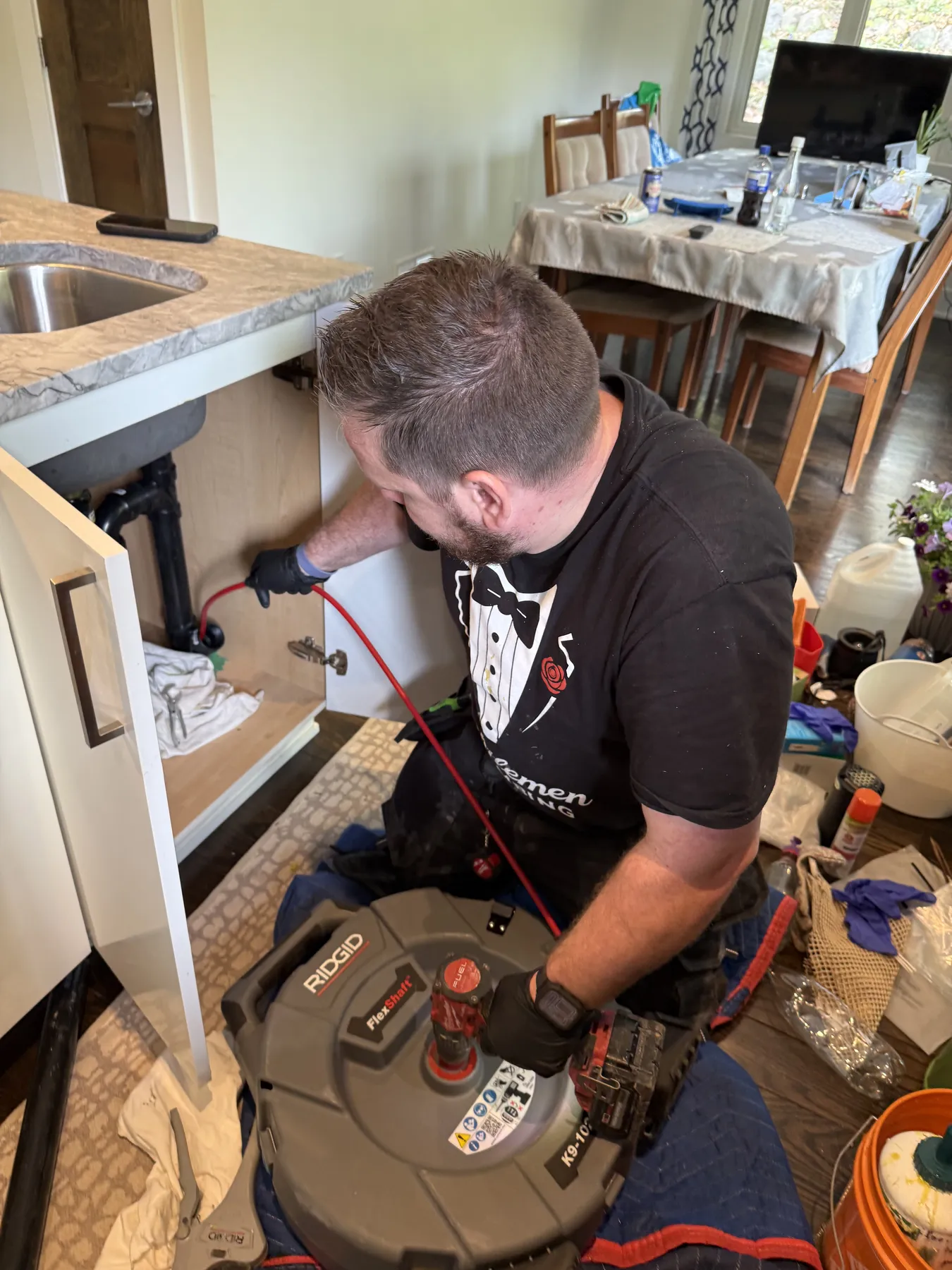
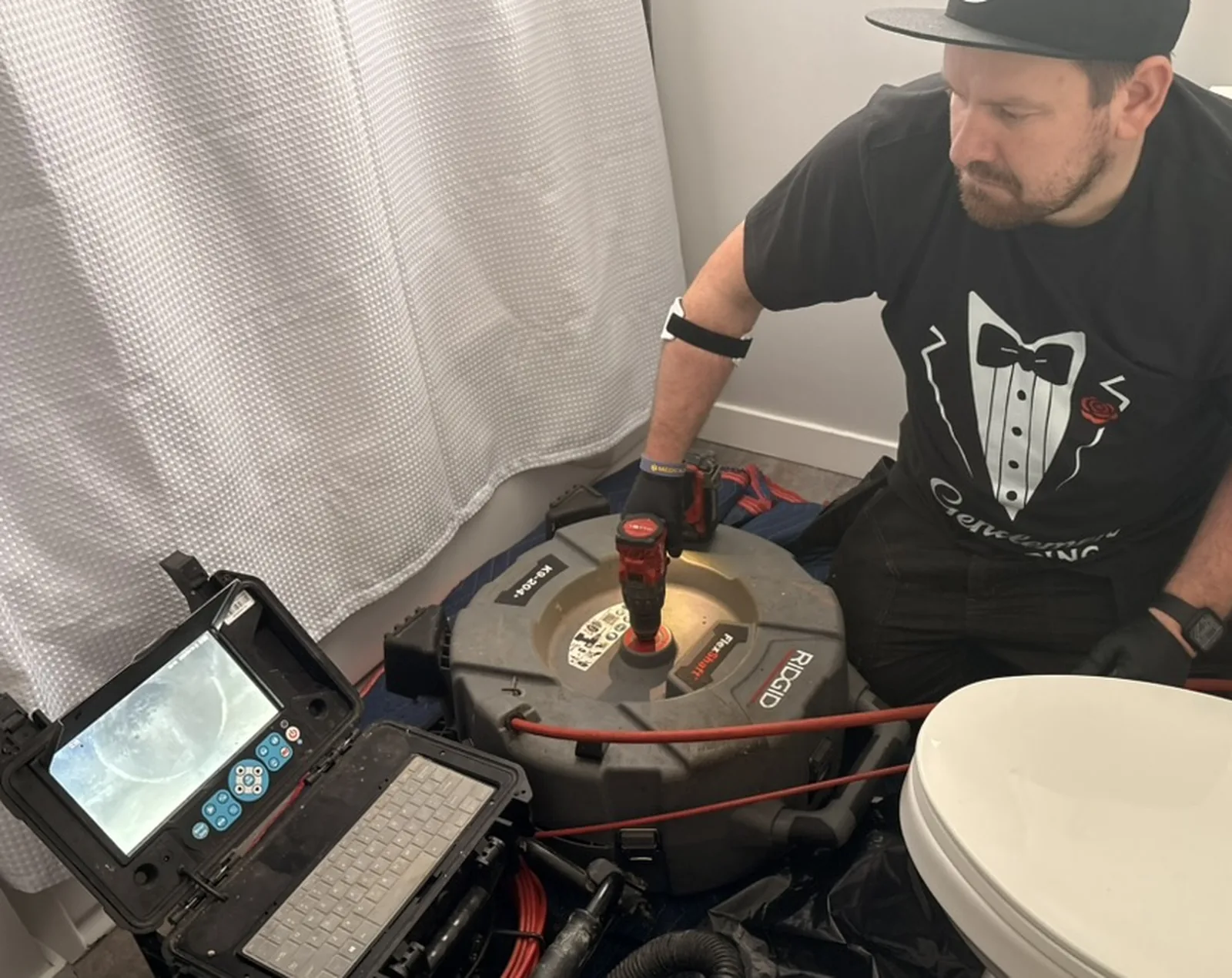
These photos are context only. They do not diagnose your home, but they connect the guide to real plumbing systems and service paths.
Related service paths
Use these links when the guide points toward professional help or a next diagnostic step.
Related homeowner guides
Open these when the symptom overlaps another homeowner-safe explanation.
Frequently asked questions
Is it safe to use chemical drain cleaner?
It is not our preferred first step. Chemical cleaners can be harsh, unsafe to handle, and unhelpful for deeper or recurring clogs.
What if only one sink is clogged?
A single sink may be a local fixture or branch issue. Start with visible, safe checks and route to clogged sink or drain cleaning if it does not clear.
What if several drains are slow?
Several drains reacting together can point beyond one fixture. Stop adding water and consider main line clog or sewer camera routing.
When should I stop using water?
Stop when dirty water appears, multiple fixtures react, a floor drain backs up, or water is rising instead of draining.
Why does the same drain keep clogging?
Recurring clogs can come from buildup, grease, hair, soap, roots, pipe condition, or deeper drainage patterns.
When does a drain need camera inspection?
Camera inspection may help when clogs recur, main-line symptoms appear, root intrusion is suspected, or repair decisions require visual information.
Need help choosing the right next step?
Book online with photos, call if water or sewage is active, or send details first if the issue is planned or hard to describe. We will help route the request clearly.