


Ottawa drain and sewer service
Kitchen Sink Clog in Ottawa
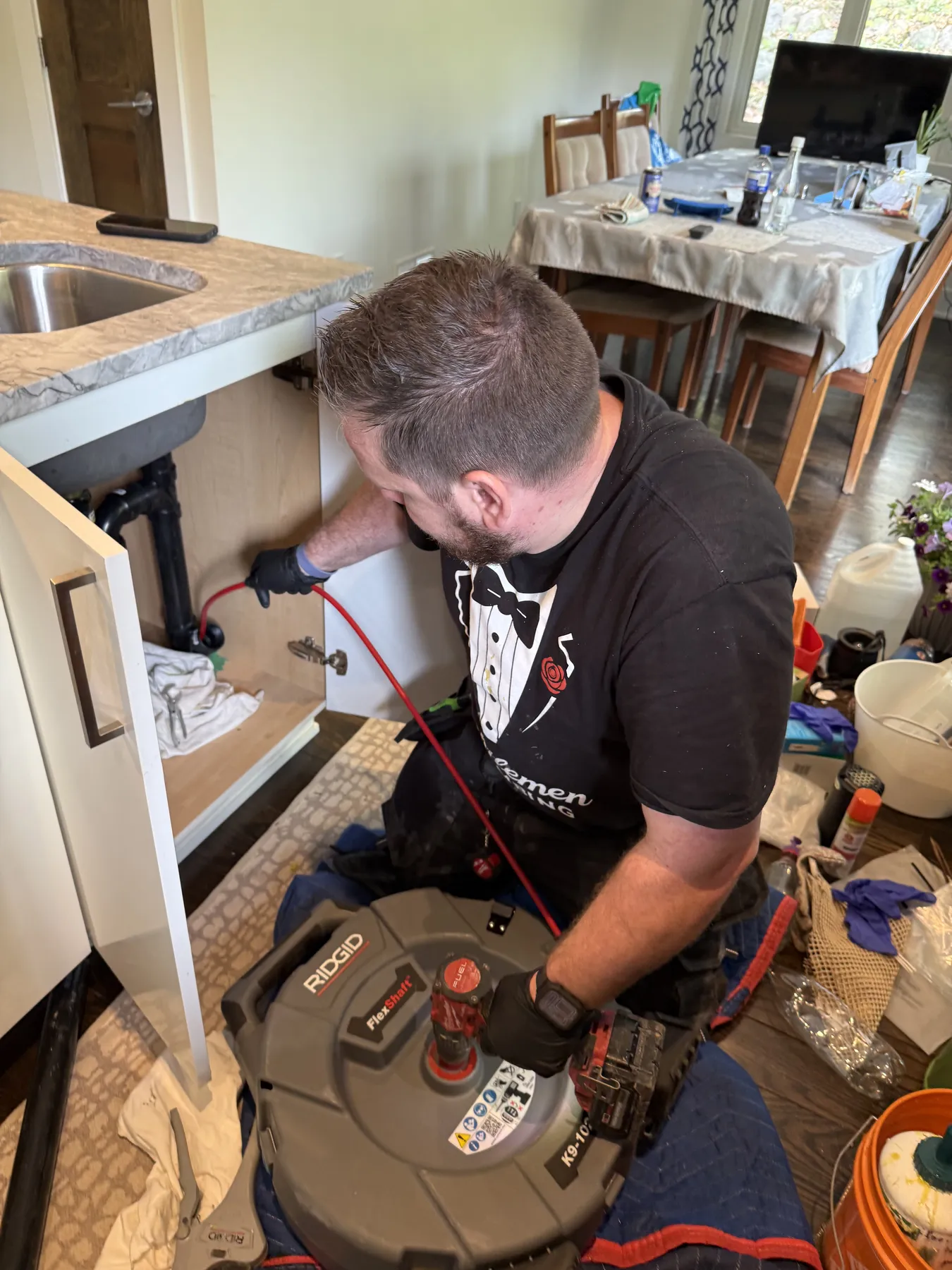
Kitchen sink backed up, draining slowly, or filling both basins? We help clear the clog, check the kitchen drain path, and explain whether the issue looks local or deeper.
Not sure where to start?
Start with what you are seeing.
You do not need the perfect plumbing term. Tell us where the issue is happening, what changed, and whether it is getting worse. We will help route the next step.
What you may be seeing
The drain pattern tells us where to start.
We start with the symptom, then look for the pattern that tells us whether the issue is local, recurring, shared, or connected to surrounding plumbing.
Both sink basins backing up
Usually points below the shared drain connection or farther down the kitchen branch.
Slow kitchen drain
Grease, food debris, soap, and buildup can narrow the drain over time.
Water returns after draining
The trap or branch may be restricted enough that water cannot leave normally.
Dishwasher water appears in sink
The dishwasher discharge path or kitchen drain connection may be involved.
Garbage disposal side backing up
The disposal, trap, or shared kitchen drain path may need checking.
Clog keeps returning
Recurring kitchen clogs may need more than a quick clear.
Diagnosis first
Kitchen clogs have their own pattern.
Grease, food debris, disposal use, dishwasher discharge, and kitchen branch buildup all change the next step.
What we check
- Is one fixture affected or several?
- Is the drain slow, blocked, gurgling, or backing up?
- Is the issue recurring?
- Is there sewer smell or dirty water?
- Would cleaning, camera inspection, or repair best explain the next step?
Drain pattern clarity
One sink, one tub, or several drains?
A slow or clogged drain can be simple, but the pattern matters. One sink, tub, or shower is different from several fixtures backing up together. We start with what you are seeing, then explain whether the issue looks local, recurring, shared, or deeper.
One fixture
A single sink, tub, or shower may point to a local clog, trap issue, stopper or pop-up issue, or fixture-specific drain problem.
Slow but still draining
A slow drain may be partially restricted by hair, soap, grease, food debris, buildup, or a stopper assembly.
Fully blocked
A drain that will not move water may need professional clearing before the fixture can be used normally again.
Recurring clog
If the same drain keeps clogging, the next step may be camera inspection, deeper cleaning, or drain repair discussion.
Other fixtures reacting
If toilets, tubs, showers, or floor drains react together, the issue may be beyond one local drain.
Sewer backup warning
Dirty water, sewage smell, or lower-level backup should be handled carefully. Stop adding water and call.
Clear options
The right path depends on what we find.
We do not force every home into the same answer. Once the issue is assessed, we explain the responsible options and what each one solves.
Clear the sink drain
Best when the clog appears local and one kitchen fixture is affected.
Check the under-sink assembly
Best when trap, disposal, dishwasher, or drain connections may be involved.
Inspect recurring kitchen clogs
Best when the same sink keeps backing up after clearing.
Discuss deeper cleaning
Hydro jetting may be relevant when grease and buildup keep loading the line, but only when evidence supports it.
What to expect
What happens during a kitchen sink clog visit
The goal is not just to fix the plumbing issue. It is to help you understand what happened, what was approved, what was done, and what to watch for afterward.
- 1
You tell us what you are seeing.
Where it is happening, when it started, and whether it is getting worse.
- 2
We ask pattern questions.
One fixture or several? Clean water or dirty water? Constant or only during use?
- 3
We inspect the relevant area.
Fixture, drain, supply, valve, tank, base, flange, or sewer path depending on the page.
- 4
We explain what appears to be happening.
Plain-English explanation, not scare tactics or jargon.
- 5
We give options where appropriate.
Repair, replacement, cleaning, inspection, or prevention path depending on the issue.
- 6
You approve price and scope before work begins.
No silent add-ons. No surprise scope shift.
- 7
We complete the approved work.
With protection for the home and care around finished areas.
- 8
We test, clean, and walk you through it.
The job is not done until the result is checked and the space is respected.
Pricing clarity
Clear options before work begins.
The service visit fee helps cover travel, time, and professional assessment. Once we understand the issue, we explain the options and confirm price and scope before work begins. If investigation changes the scope, we pause, explain the change, and re-approve before continuing.
Helpful guides
Helpful resources for this problem
These resources can help you understand the issue and reduce risk before the next step.
Questions homeowners ask
Questions about Kitchen Sink Clog in Ottawa
Why is my kitchen sink backing up?
Kitchen sinks often clog from grease, food debris, soap buildup, trap restrictions, disposal issues, dishwasher discharge problems, or branch-line buildup.
Why are both sides of my kitchen sink full of water?
If both basins are backing up, the restriction is usually below the shared drain connection or farther down the kitchen branch.
Should I pour grease down the sink with hot water?
No. Hot water may move grease temporarily, but it can cool and build up farther down the drain.
Can the dishwasher cause water to back up into the sink?
The dishwasher discharge path can interact with the kitchen drain. If water appears during or after dishwasher use, that connection should be checked.
Is a kitchen sink clog a main line clog?
Usually not if only the kitchen sink is affected. If several fixtures are slow or backing up, the problem may be deeper.
Can hydro jetting help a kitchen sink line?
It may help when grease and buildup are recurring and the line condition supports it. We do not recommend jetting as a blanket answer for every kitchen sink clog.
What if the kitchen sink keeps clogging?
Recurring kitchen clogs may mean grease buildup, poor slope, branch-line loading, or another underlying issue. The next step may be inspection, deeper cleaning, or repair.
Do you confirm the price before clearing it?
Yes. We assess the issue, explain the likely method, and confirm price and scope before beginning approved work.
Ready for the next step?
One drain, several drains, or something deeper?
Tell us which fixtures are affected, whether anything is backing up, and whether the issue keeps returning. We will help identify the pattern and explain the responsible next step.