


Ottawa residential plumbing
Backwater Valve Installation in Ottawa
Worried about sewer backup risk, basement floor drain backup, or lower-level protection? We explain what a backwater valve does, what it does not do, and what should be checked first.
Planning a bigger installation?
The scope should be clear before work begins.
Replacement and installation work should include a clear explanation of what is included, what may change, and what happens before the home is opened or equipment is moved.
What you may be seeing
A backwater valve conversation usually starts with basement sewer risk.
Previous backup, floor drain issues, finished basement plans, or prevention concerns can all lead to a backwater valve discussion.
Previous sewer backup
A previous backup often starts the sewer-protection conversation.
Floor drain backup
Water or sewage at the floor drain can be part of the backwater-valve discussion.
Finished basement protection
Finished spaces are expensive to restore after sewer backup.
Neighbourhood concern
Nearby sewer backup stories often lead homeowners to ask about prevention.
Basement renovation planning
Protection is easier to discuss before finishing the basement.
Insurance, resale, or prevention question
Some homeowners want to understand whether a valve belongs in the plan.
Diagnosis first
Backwater valve installation needs the right location, access, and scope.
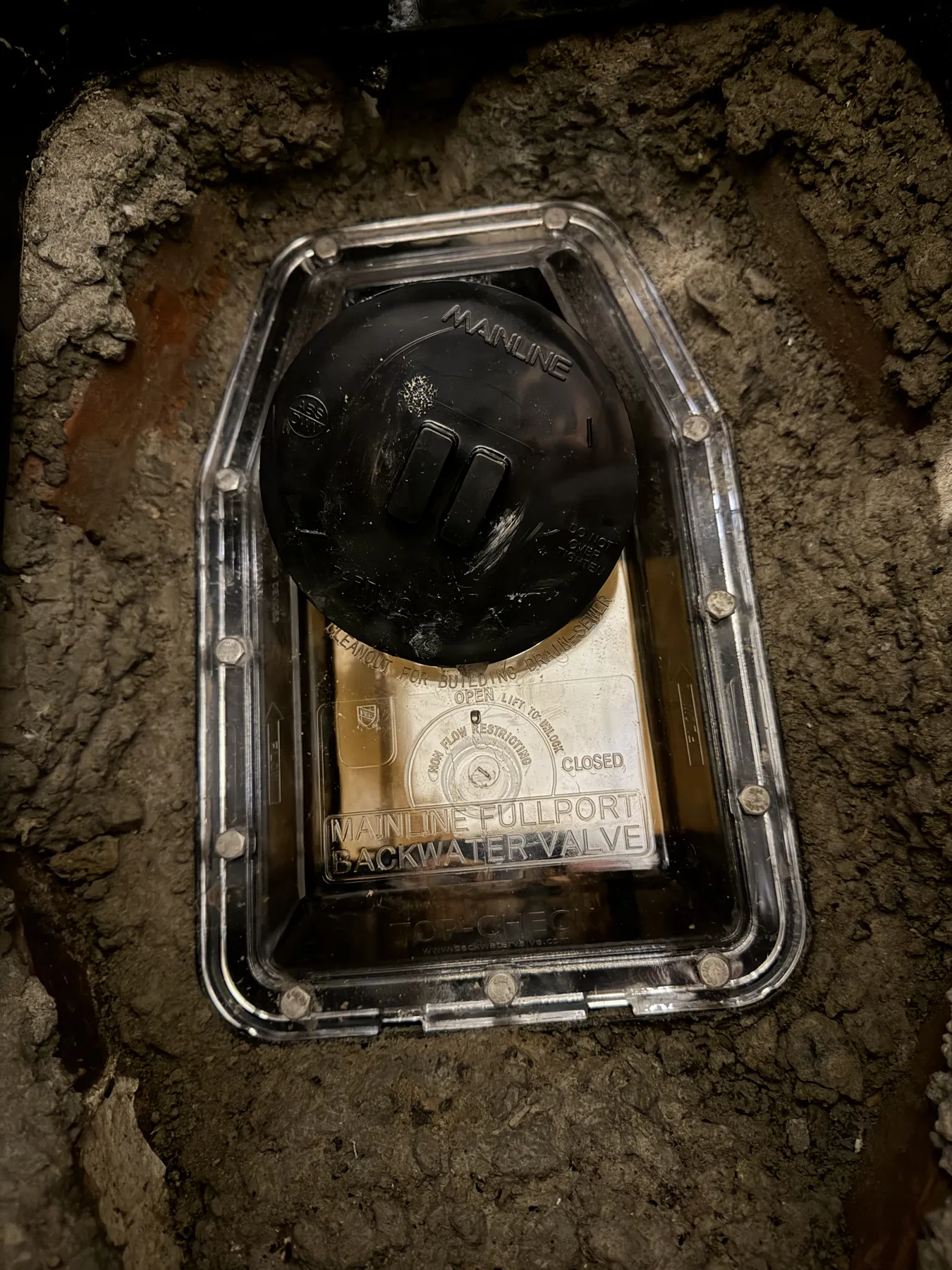
A backwater valve is installed on the sanitary drain path to help reduce sewer backup risk in certain conditions. It is different from a sump pump, and installation should be explained before the floor is opened.
What we look for
- Where is the building drain?
- Is camera inspection useful before installation?
- Is the issue sewer backup, floor drain backup, sump water, or foundation seepage?
- What floor or concrete access may be required?
Basement system clarity
Basement water is not always the same kind of water.
A wet basement can come from different systems. Sump pumps, floor drains, sewer lines, and backwater valves all matter, but they do different jobs.
Groundwater / sump system
Water from weeping tile or foundation drainage collects in the sump pit and should be pumped outside.
Sump discharge
The pump may run, but a blocked, frozen, disconnected, or poorly routed discharge line can still leave the basement at risk.
Floor drain / sanitary drain
Water coming up from a basement floor drain can point toward a drain, building drain, main line, or sewer problem.
Backwater valve / sewer protection
A backwater valve is part of the sanitary sewer protection path. It is not the same thing as a sump pump.
Clear options
Sewer backup protection, explained before the floor gets opened.
We do not force every home into the same answer. Once the issue is assessed, we explain the responsible options and what each one solves.
Inspect / clarify system
Make sure the issue is sewer-related, not sump or foundation water.
Discuss installation scope
Explain access, location, and what may need to be opened.
Quote boundaries
Clarify what is included and what restoration is excluded.
Explain maintenance
A backwater valve needs access and maintenance to remain reliable.
What to expect
What to expect from a backwater valve installation discussion
The goal is not just to fix the plumbing issue. It is to help you understand what happened, what was approved, what was done, and what to watch for afterward.
- 1
You tell us what you are seeing.
Where it is happening, when it started, and whether it is getting worse.
- 2
We ask pattern questions.
One fixture or several? Clean water or dirty water? Constant or only during use?
- 3
We inspect the relevant system.
Fixture, pipe, shutoff, drain, water heater, sump, or sewer path depending on the page.
- 4
We explain what appears to be happening.
Plain-English explanation, not scare tactics or jargon.
- 5
We give options where appropriate.
Repair, replacement, cleaning, inspection, or prevention path depending on the issue.
- 6
You approve price and scope before work begins.
No silent add-ons. No surprise scope shift.
- 7
We complete the approved work.
With protection for the home and care around finished areas.
- 8
We test, clean, and walk you through it.
The job is not done until the result is checked and the space is respected.
Installation scope matters
Sewer protection should be explained before the floor gets opened.
A backwater valve installation may involve access, floor opening, drain layout, inspection, and restoration boundaries. We explain what is included and what is not before work begins.
Helpful guides
Helpful resources for this problem
These resources can help you understand the issue and reduce risk before the next step.
Questions homeowners ask
Questions about Backwater Valve Installation in Ottawa
What does a backwater valve do?
A backwater valve helps reduce the risk of wastewater flowing backward into the home through the sanitary drain path during certain sewer backup conditions.
Does a backwater valve stop sewer backups?
It helps reduce risk when installed and maintained properly, but it is not a guarantee against every possible sewer or basement-water problem.
Is a backwater valve the same as a sump pump?
No. A sump pump handles groundwater around the foundation. A backwater valve is part of the sanitary sewer protection path.
Do I need a camera inspection before installation?
A camera inspection may be useful depending on the drain layout, condition, access, and backup history. The goal is to understand the sewer path before opening floors or quoting a major installation.
Where is a backwater valve installed?
It is installed on the sanitary drain path at a suitable location based on the home’s drainage layout and access. The exact location has to be assessed.
Does installation require opening the floor?
Often, yes, but it depends on access and the existing drainage layout. Any floor opening, concrete work, or restoration limits should be explained in the quote.
Can a backwater valve help with floor drain backup?
It may be part of the sewer-backup prevention conversation if the floor drain backup is related to the sanitary sewer path. The cause should be clarified before assuming a valve solves it.
Does a backwater valve need maintenance?
Yes. Backwater valves need access and maintenance so they can function properly. A valve that is ignored can become less reliable over time.
Should I install one before finishing my basement?
It is worth considering before finishing a basement, especially if the home has backup history or lower-level fixtures. It is easier to discuss protection before the basement is finished than after damage occurs.
Do you quote the installation scope before work begins?
Yes. The installation location, access, expected scope, and limitations should be explained before the floor is opened or work begins.
Ready for the next step?
Not sure if it is sump, floor drain, sewer, or foundation water?
Tell us where the water is appearing and whether it is happening now or only during rain. We will help separate the likely system and explain the next step.