


Ottawa pipe material replacement
Polybutylene Pipe Replacement in Ottawa
If your home may have polybutylene piping, the right first step is a careful assessment. We look at visible pipe material, fittings, leak history, access, and practical replacement options before recommending a scope.
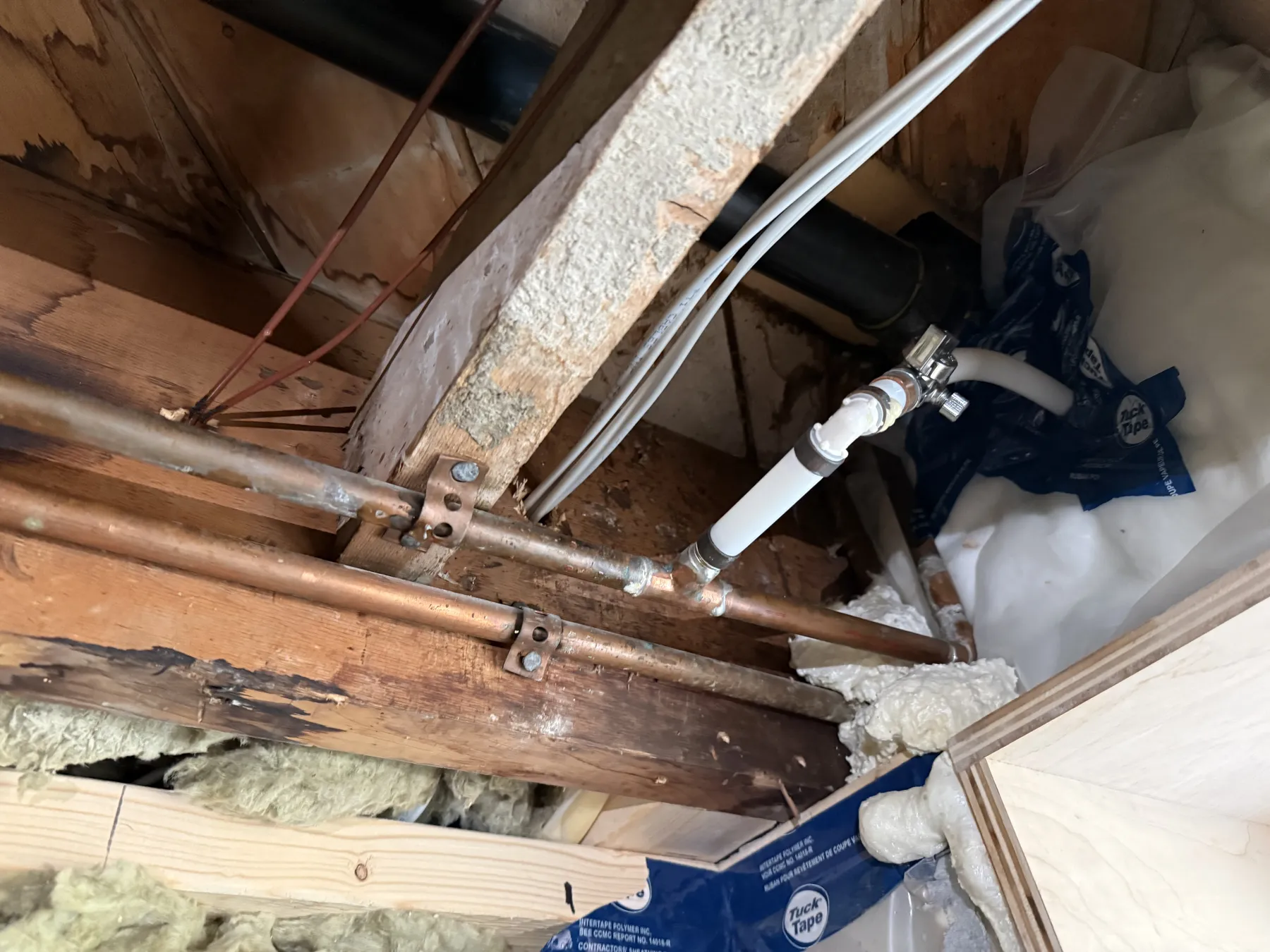
Material clarity
Do not guess from pipe colour alone.
Polybutylene questions should be confirmed by careful inspection of visible pipe, markings, fittings, age, context, and accessible areas. If there is an active leak, the first step is controlling the water.
- Keep inspection reports or photos available if the concern came from a sale, insurance review, or renovation.
- Do not open finished walls or ceilings just to investigate unless the scope is clear and approved.
- If water is active, treat the situation as a pipe repair or leak concern first.
Why homeowners ask
Polybutylene questions usually start with a clue.
The reason for the replacement conversation matters: inspection concern, active leak, renovation access, or long-term planning.
A home inspection flagged the piping
Inspection reports may raise material, age, or insurability questions.
Recurring leaks
Repeated leaks in similar piping or fittings may point toward broader replacement planning.
Open walls or ceilings
Renovation access can make replacement easier to plan in responsible stages.
Older grey or plastic piping
Colour can be a clue, but markings, fittings, and context matter.
Sale or insurance concern
Some homeowners need clarity because a buyer, insurer, or inspector asked for it.
Peace-of-mind planning
Replacement may be worth planning before damage or renovation timing forces the issue.
Assessment first
We confirm what is visible before recommending replacement.
Polybutylene replacement can involve walls, ceilings, fixtures, valves, and water-control planning. We assess accessible material and explain whether the work looks localized, staged, or broader before quoting.
What we look for
- Visible pipe markings, fittings, and locations
- Leak history and past repair evidence
- Fixture areas served by the suspected piping
- Access and restoration limits
- Shutoff and connected valve conditions
Replacement scope
Localized, staged, or broader?
Replacement planning should be practical, not panic-driven.
Material confirmation
We review visible evidence before making recommendations.
Localized replacement
A defined accessible section may be addressed first.
Staged work
Multiple areas can sometimes be handled in phases.
Broader plan
Wider replacement may make sense when risk, access, and history support it.
Clear options
Replacement can be planned responsibly.
The best path depends on visible material, access, leak history, and homeowner goals.
Confirm the material
Best when the homeowner is unsure what pipe material is present.
Replace a defined area
Best when one exposed run or fixture group is the concern.
Plan in stages
Best when access or budget suggests a phased approach.
Repair active water first
Best when the concern starts with a current leak.
What to expect
What happens during a polybutylene replacement assessment
We keep the visit organized, explain the scope, and confirm the plan before approved work begins.
- 1
Tell us what you are planning
Share what you have now, what changed, and what result you want.
- 2
We assess the setup
We look at access, visible condition, connected plumbing, and practical constraints.
- 3
You get clear options
We explain what is included, what is not included, and what may affect scope.
- 4
Price and scope are approved
Approved work starts only after the plan and quote are clear.
- 5
We test and clean up
After the work, we test what we can, clean the area, and explain the next steps.
Pricing clarity
Quoted clearly after assessment.
Installation or replacement work depends on access, materials, equipment, and scope. We assess first, explain what is included, and confirm the quote before approved work begins.
Questions homeowners ask
Questions about Polybutylene Pipe Replacement in Ottawa
How do I know if I have polybutylene pipes?
A plumber can assess visible pipe markings, fittings, colour, installation context, and accessible areas. Colour alone is not enough to confirm the material with confidence.
Does suspected polybutylene piping always mean full replacement right away?
Not every situation is the same. Leak history, visible condition, inspection concerns, access, and homeowner goals all matter. We assess first and explain practical options.
Can polybutylene replacement be done in stages?
Often, yes. Depending on access and risk, replacement may be planned by area, fixture group, basement access, or renovation phase.
Will walls or ceilings need to be opened?
Sometimes. It depends on where the piping runs and what access already exists. We explain access expectations and restoration limits before work begins.
Do you handle drywall and paint after replacement?
This page covers plumbing replacement. Drywall, paint, flooring, or restoration should not be assumed unless specifically included in the approved scope.
Will I get a quote before work starts?
Yes. We assess visible plumbing and access conditions first, then provide a clear quote for the approved replacement scope.
Ready for the next step?
Not sure what to call it yet? That is okay.
Tell us what you are seeing, where it is happening, and whether it is getting worse. We will help sort the likely source, explain the next step, and confirm price and scope before work begins.