


How to Help Prevent Frozen Pipes in Ottawa
Ottawa winters can expose weak spots in a home’s plumbing. This guide explains where frozen-pipe risk often starts, what you can check before extreme cold, and when no-water symptoms should be treated as more than an inconvenience.
Quick answer
Protect cold zones first: exterior walls, garages, crawlspaces, basement edges, hose bibs, and poorly heated areas. Know where your shutoff is, avoid open flames, and call if a pipe may have frozen and then started leaking.
What is this connected to?
Use these compact routes when the guide points toward a specific service page.
What to know first
Practical boundaries that keep the guide useful without turning it into risky DIY instructions.
Where frozen-pipe risk often starts
Frozen-pipe risk often begins where plumbing passes through cold or poorly heated areas. The exact risk depends on the home, but exterior walls, garage piping, crawlspaces, hose bib lines, and basement edges are worth attention before a cold snap.
- Exterior wall fixtures
- Garages and crawlspaces
- Basement perimeter areas
- Outdoor hose bibs and exposed piping
If one fixture loses water
A single no-water fixture during a cold snap can be a clue. Do not assume the whole system is frozen. Note which fixture is affected, whether hot or cold is affected, and whether any water appears after thawing.
What not to do
Do not use open flame or aggressive heat. Frozen-pipe concerns become more serious if a pipe splits and starts leaking after thawing.
Frozen Pipe Risk Checklist
Use this checklist before extreme cold or when a fixture suddenly has no water.
Main shutoff location known
Cold-weather no-water symptoms can become leaks after thawing. Avoid open flame and know where the shutoff is.
What this guide is helping you sort
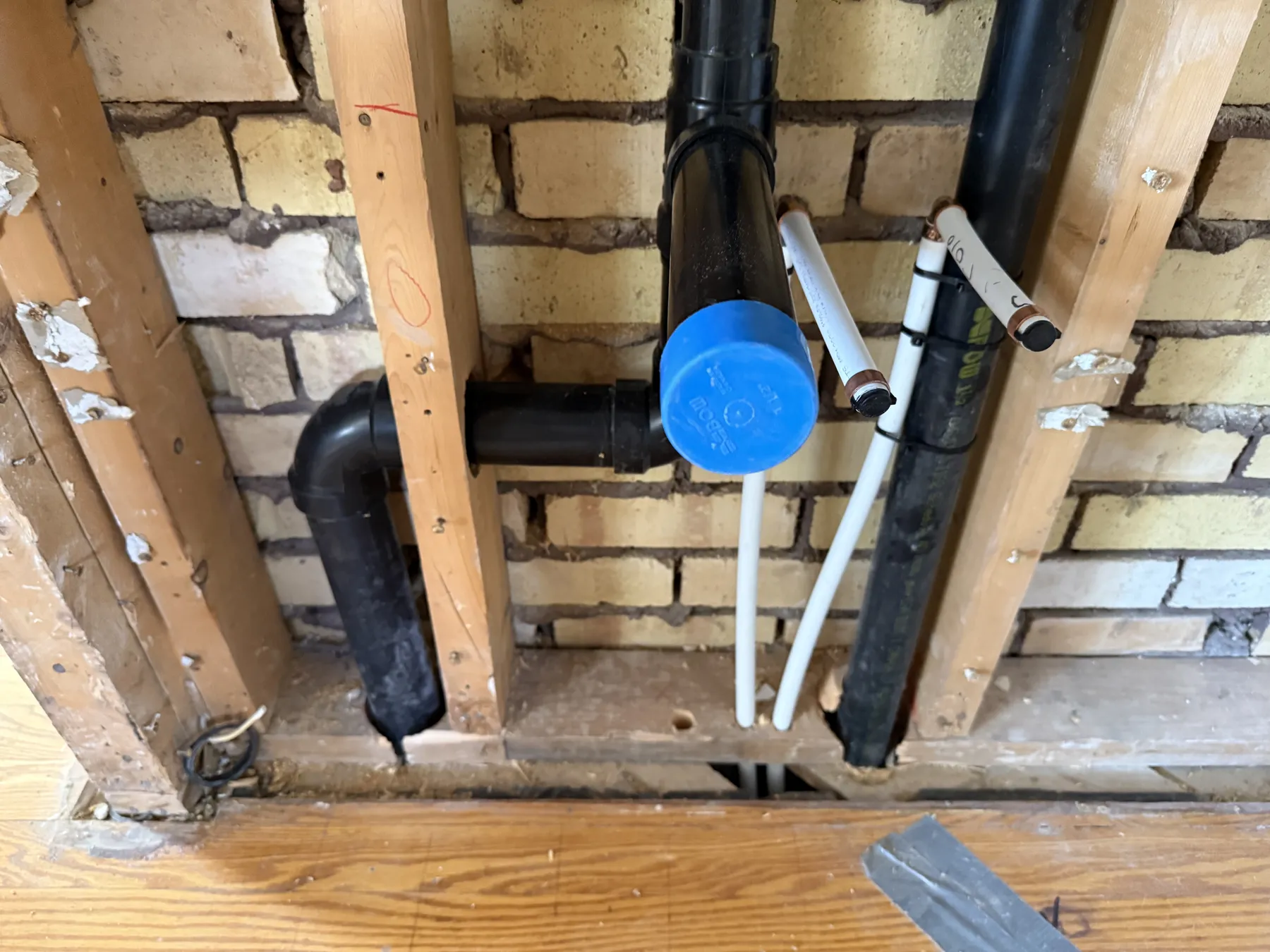
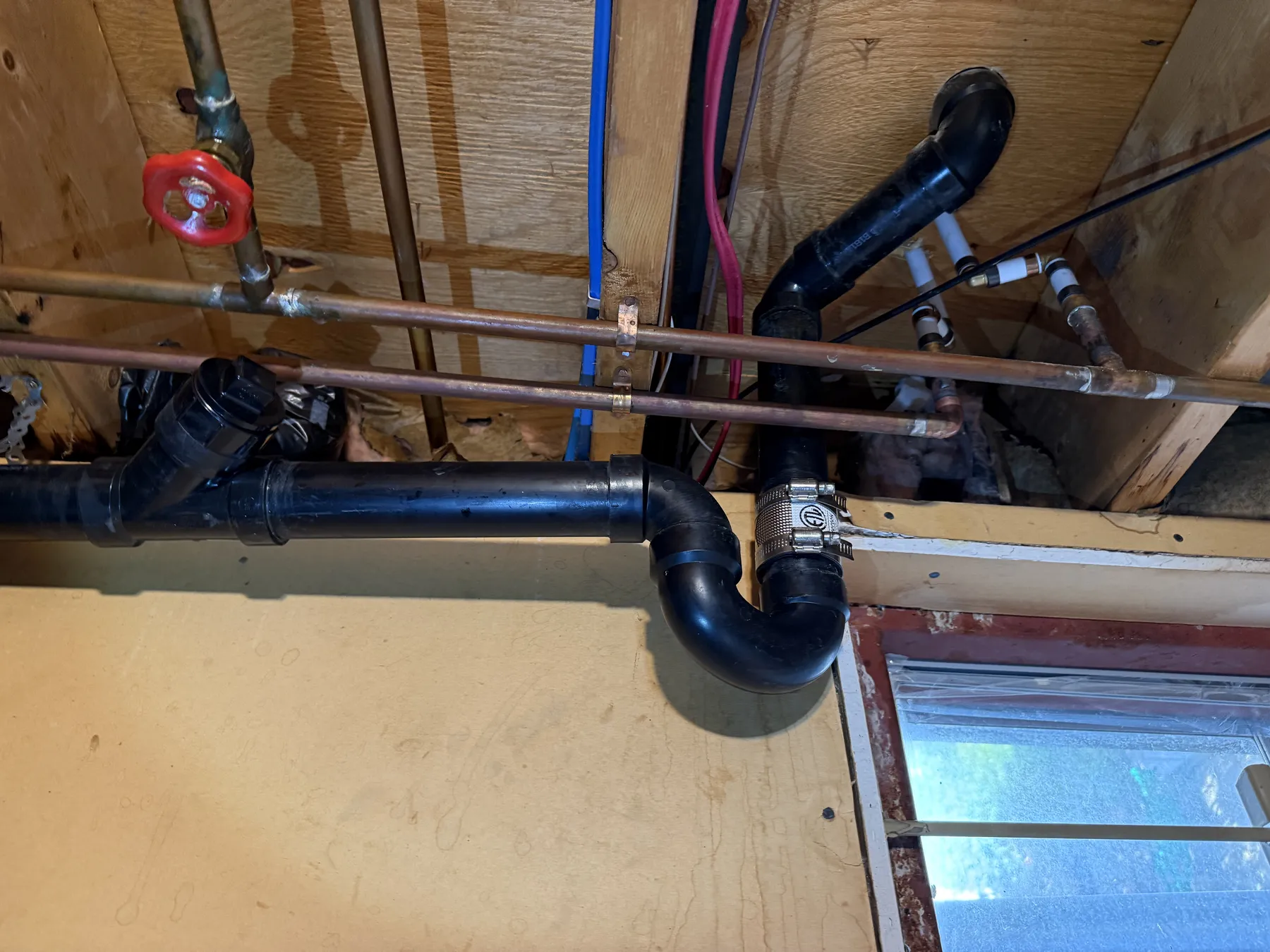
These photos are context only. They do not diagnose your home, but they connect the guide to real plumbing systems and service paths.
Related service paths
Use these links when the guide points toward professional help or a next diagnostic step.
Related homeowner guides
Open these when the symptom overlaps another homeowner-safe explanation.
Frequently asked questions
How do I know if a pipe is frozen?
A frozen pipe may show up as no water at one fixture, only hot or cold affected, or symptoms near an exterior wall or cold area.
What should I do if only one fixture has no water?
Stop and note the pattern. If there is no active leak, request service or call for guidance. If water appears after thawing, call first.
Can frozen pipes leak after thawing?
Yes. Ice expansion can split or weaken pipe, and the leak may appear when water starts moving again.
Should I shut off the water?
If water is actively leaking and you can safely access the correct shutoff, water control is usually the first priority.
What should I avoid when warming a pipe?
Avoid open flame, torches, and aggressive heat. These can create fire risk or damage material.
Can a plumber help reduce frozen-pipe risk?
Yes. A plumber can assess vulnerable areas, shutoff access, visible piping, and repair or replacement needs before winter problems become urgent.
Need help choosing the right next step?
Book online with photos, call if water or sewage is active, or send details first if the issue is planned or hard to describe. We will help route the request clearly.